Integrations, working as one system.
Stripe, Twilio, ServiceM8, Xero, HubSpot — set up properly, connected to each other, and fixed when they break. One clear picture of your business, drawn from data you already have.
 ServiceM8
 Stripe
 Twilio
 Xero
Xero HubSpot
Most small businesses don't have a data problem — they have five systems that don't talk. The answers already exist. Nothing joins them up.
Payments in Stripe, jobs in ServiceM8, invoices in Xero, leads in a spreadsheet. When an SMS stops sending or a webhook fails silently, nobody knows whose job it is to fix it — so it stays broken for months.
Every connection mapped, tested with live data, and logged. When Stripe or Twilio misbehaves, we read the logs, find the failure, fix it at the source — then wire an alert so it can never fail silently again.
▸ The thinking — why this matters
Integration failures don't announce themselves. A webhook returns errors nobody reads; SMS delivery quietly drops; a payment reconciles into the wrong ledger. The invoice still arrives, so everything looks fine — until you notice the CRM has been three weeks stale. Finding these failures is log-reading work, and agents are very good at reading logs.
Connection is only half the job. Once your systems share data, the questions that actually run a business become answerable: which channel produces jobs, not clicks; which service line carries the margin; which customers come back. That's the picture we build the plumbing for.
Five verbs. One connected business.
Set up, connect, troubleshoot, audit, analyse.
Set up
New platforms stood up properly the first time — accounts configured, webhooks wired, keys secured, and every flow tested with a live transaction before handover.
Connect
Systems joined at the API, not through brittle middleware — jobs flow to invoices, payments to your CRM, enquiries to SMS, ad spend to actual revenue.
Troubleshoot
Failed webhooks, undelivered SMS, payments that stopped reconciling — diagnosed from the logs and fixed at the source, not patched over with another subscription.
Audit
Your whole stack tested and documented: what talks to what, what's silently broken, what you're paying for twice. You get the map in plain English.
Analyse
Data from every system pulled into one picture, so decisions come from numbers, not gut feel — which jobs, which suburbs, which channels actually pay.
Monitor
Alerts wired to every critical connection, so the next failure pages someone instead of hiding for a quarter.
Whatever your business runs on, we speak it.
These are the platforms Australian small businesses actually live in. We work across all of them — and if yours isn't here but has a documented API, we can wire it in.
 Square
 MYOB
MYOB QuickBooks
 Mailchimp
 Calendly
 Shopify
 WooCommerce
 Google Ads
 Meta
Meta GA4
GA4 Zapier
 Airtable
▸ Not listed? If it can talk HTTP, we can connect it. Logos shown are the property of their respective owners.
The integrations below are running live businesses right now.
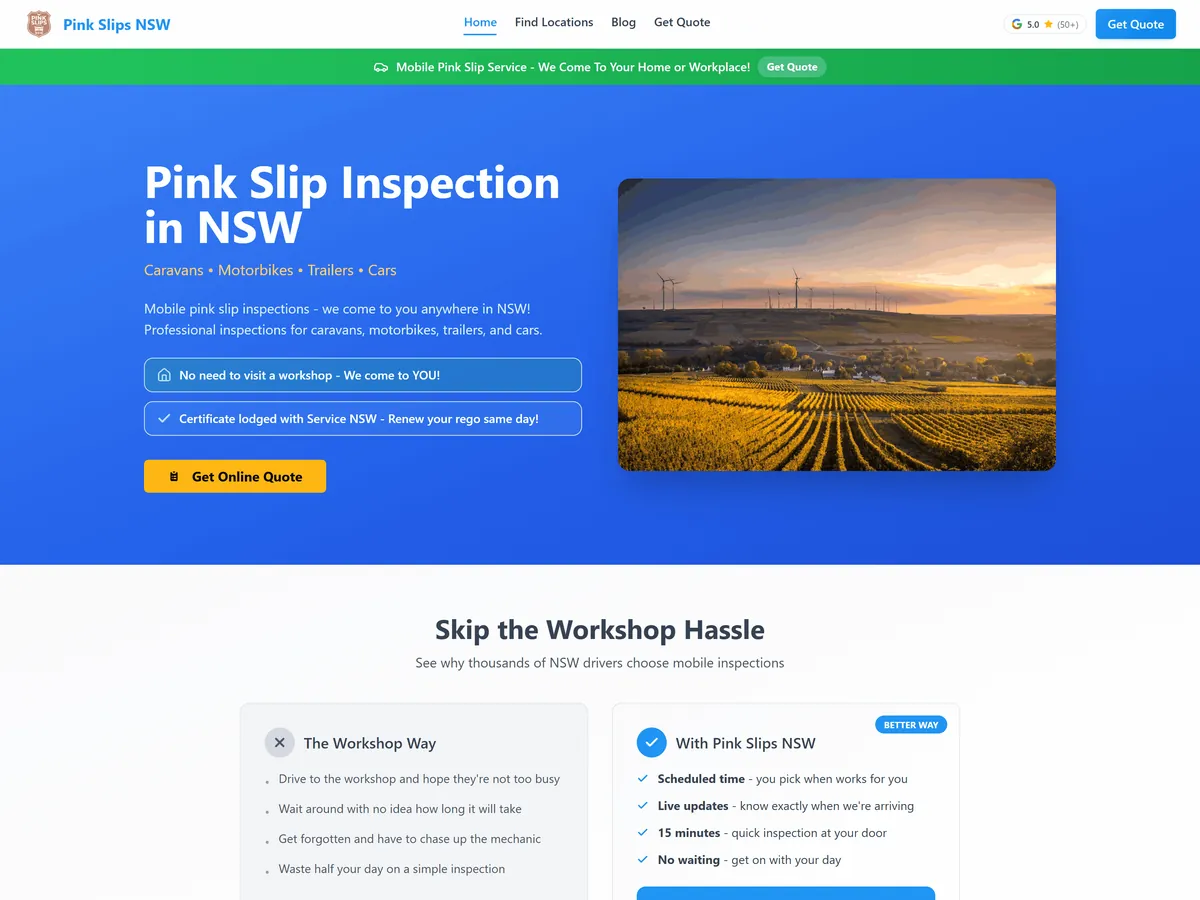
Cost per lead, down 80%.
Custom booking platform — calendar, payments, ops. Five times more leads per dollar and zero hours of weekly admin.

From local listings to dominant.
Suburb-page architecture + perf overhaul + Google Ads engineering.

Conversion tracking, rebuilt.
Termite landing pages + runtime-verified tracking. Caught the silent drop a source-only audit missed.
If I don't deliver measurable results inside 90 days,
I'll keep working until I do.
Common questions about integrations
Integrations across Australia
The same agent-run playbook, tuned to each market's own demand data — every capital, 661 locations.